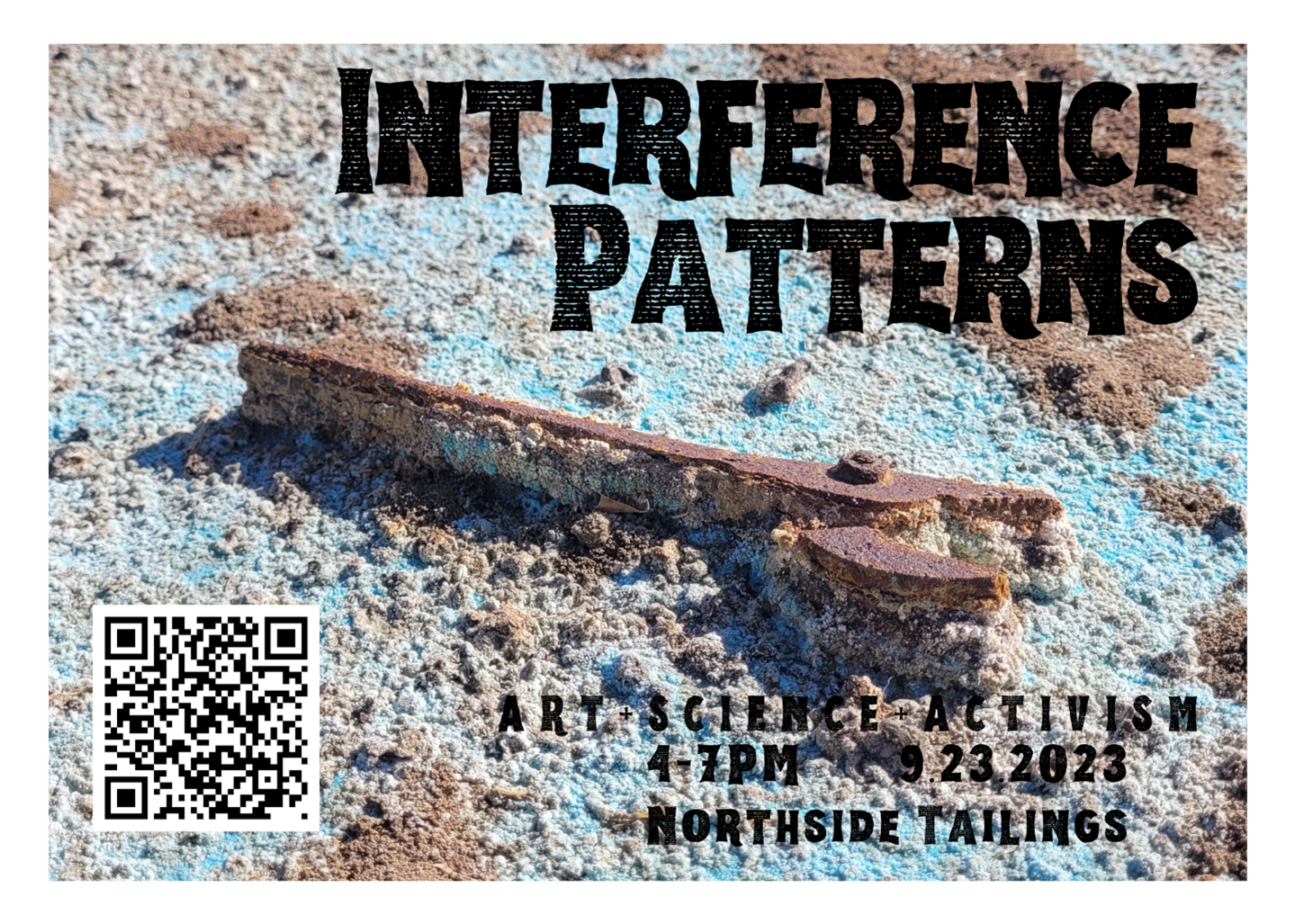
This week feels like a useful moment to think about how Butte changes contaminated places, and how those places change the people who live with them. EPA has just made a significant change to the city's residential lead cleanup program. September 23 also marks three years since I staged Interference Patterns in the Northside Tailings.
The two have little to do with one another technically. They are connected for me because both belong to a much larger question about place: who gets to define what is dangerous, what gets cleaned up, what remains, and what role the people living closest to the contamination actually have in deciding what comes next?
Which brings me to a story about my friend Nora drinking the groundwater.
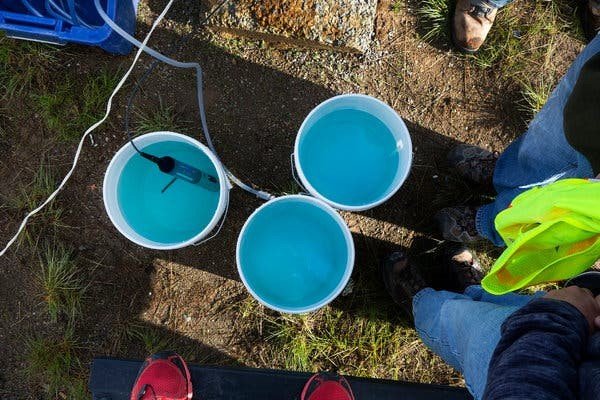
I may have some of the details wrong, but this is how the story has stayed with me. Nora Saks was recording Richest Hill, her podcast about Butte, with Pat Cunneen. As I remember it, they were at a monitoring well in the Northside Tailings and had pulled up groundwater the astonishing electric blue that people around Butte sometimes compare to Gatorade. Pat jokingly offered her a taste, and Nora called his bluff.
I do not remember how much she actually tasted, or how quickly everyone realized this was probably not a good idea. I hope I can track down the recording. What has stayed with me is the image: bright blue groundwater in a bucket and a person putting some of it in her mouth.
The color by itself does not tell you how toxic water is, but groundwater beneath mine-waste areas in this part of Butte has contained extraordinary concentrations of dissolved metals. What interests me about Nora's story is the collapse of distance. Groundwater contamination usually reaches us as a plume on a map, a row in a spreadsheet, or a paragraph in a technical report. Here it was water in a bucket. It had a color. You could stand beside it and touch it. Apparently, if the joke went badly enough, you could taste it.
Superfund has to translate places into abstractions: concentrations, exposure pathways, receptors, action levels, institutional controls, remedial alternatives. These abstractions are necessary. I use them myself. I am an environmental engineer. But people do not live in abstractions. They live in houses. They dig in yards. Their children build forts in vacant lots. They ride bicycles through mine waste and look out kitchen windows at contaminated ground. They experience a place long before anyone explains what that place means in a technical report.
I have spent much of the last fifteen years wondering what meaningful public participation looks like when the people most affected by an environmental cleanup experience it first as a place they live, while the cleanup itself increasingly belongs to a world of models, legal agreements, technical language, and public meetings.
I did not arrive at that question all at once.
When I moved to Butte in 2011, one of the first things I did was have the soil around my house tested through the Residential Metals Abatement Program, or RMAP. I had two young sons. My front yard contained enough lead to trigger remediation, so it was excavated and replaced. The backyard did not. I no longer remember the exact concentration, but I remember something in the range of 700 to 900 parts per million. Butte's residential lead action level was 1,200 ppm, so the backyard stayed.
I was beginning my environmental engineering education at Montana Tech and learning about toxicology and risk assessment. I understood why regulatory systems need numbers. Engineers need criteria. Agencies need thresholds. Somewhere, somebody has to decide when to dig. But I was also a father, and my question was simpler: was my backyard safe for my sons?
I emailed the EPA remedial project manager and asked. I never felt like I got a straight answer.
Risk numbers have a peculiar way of becoming facts once they appear in a table. Above 1,200 ppm, remediate. Below 1,200, don't. After a while the number can begin to feel like a property of the soil itself, almost like the freezing point of water. It isn't. The number comes from a model, and the model depends on assumptions about exposure, ingestion, absorption, household dust, physiology, and what blood-lead concentration it is designed around. Change an assumption and the answer changes.
In 2012, the Centers for Disease Control and Prevention lowered its reference value for childhood blood lead. And this number was buried deep in a model the EPA used to determine how much lead in a yard is too much. I began asking what that meant for Butte, and I spent a surprising amount of the next decade asking.
Along the way I was also learning the peculiar poetry of Superfund and environmental engineering: technical impracticability, in perpetuity, cone of depression, waste in place. Engineers can sit around a table discussing a cone of depression that must be managed in perpetuity because restoration is technically impracticable without acknowledging that we sound like unusually gloomy surrealist poets.
The art really started with a bicycle ride.
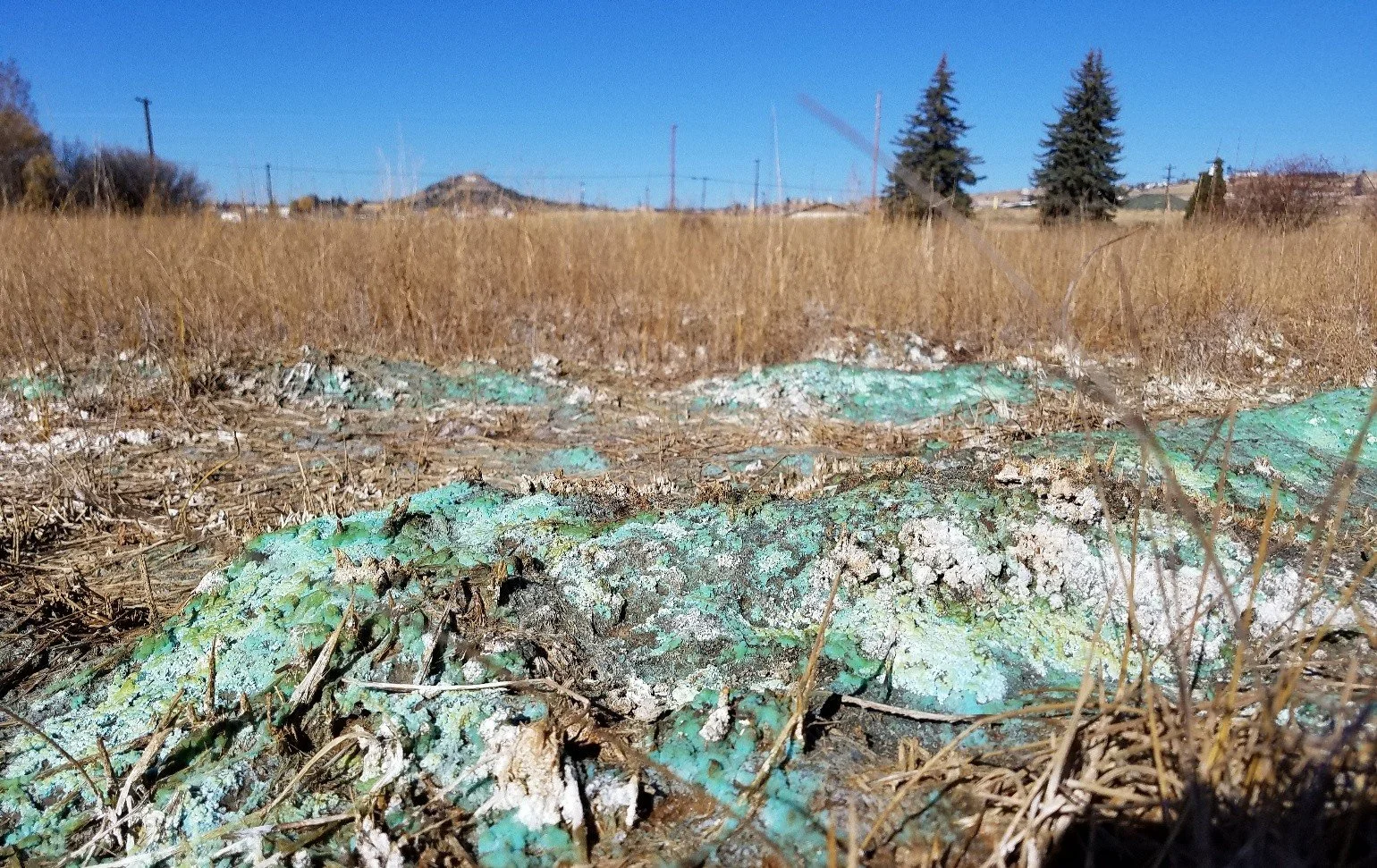
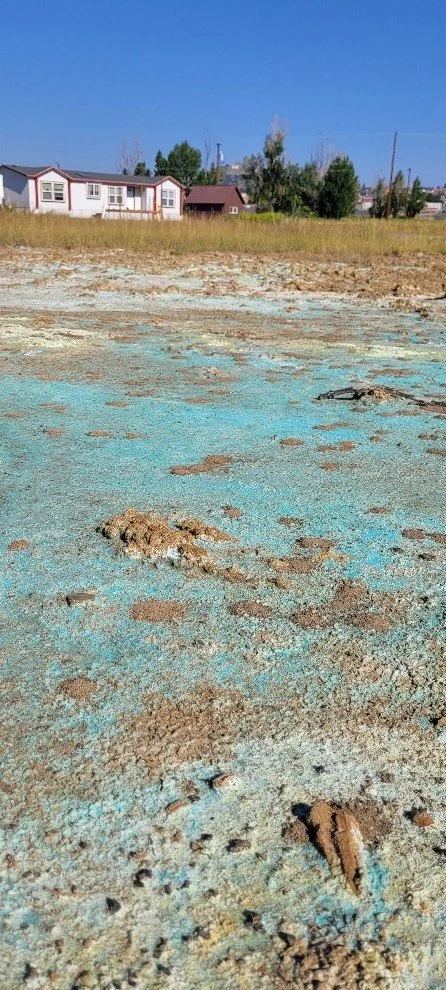
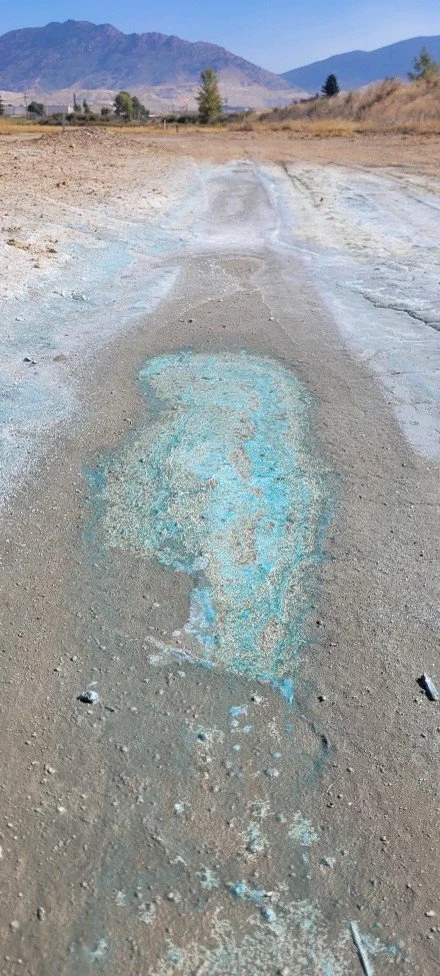
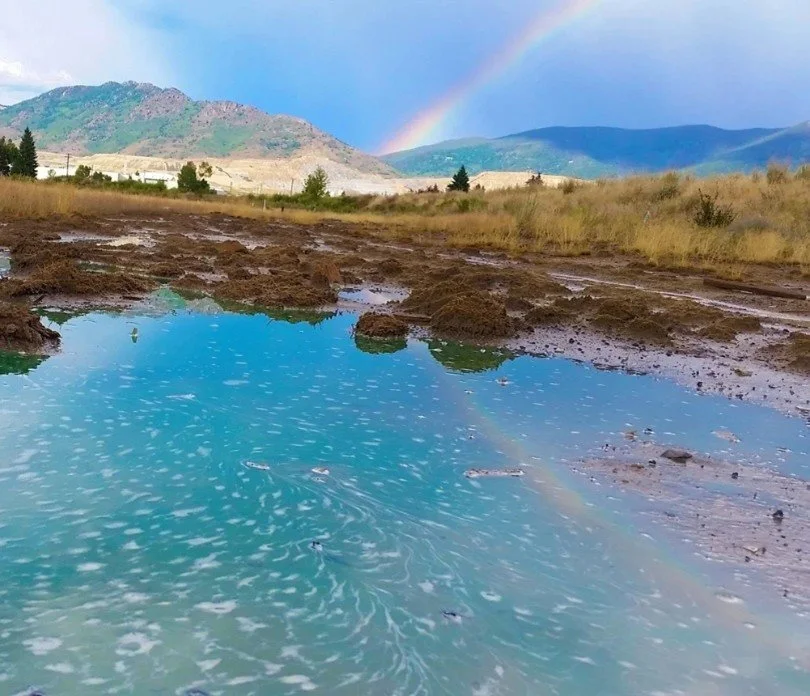
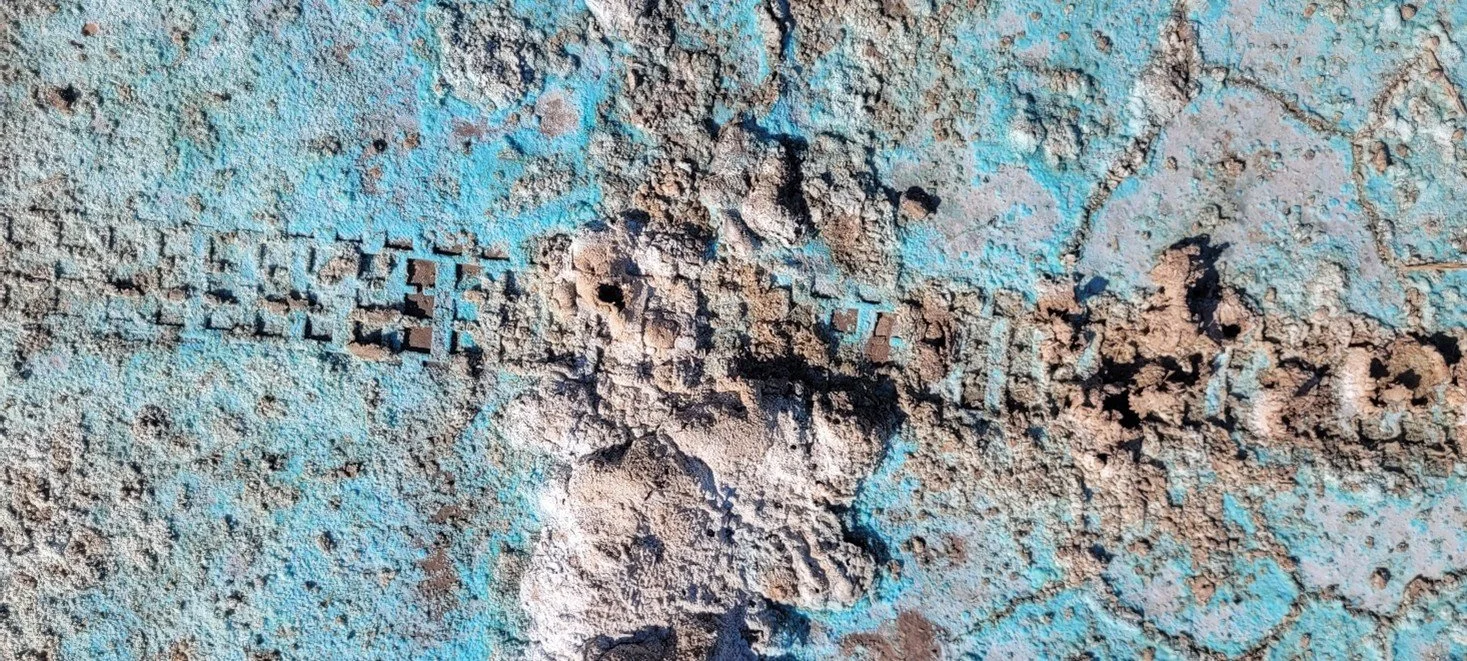
In August of 2015, I was riding around Butte, poking around some of the postindustrial places that are easier to find on a bike than from a car, when I ended up at the Northside Tailings. There was a rainbow in the sky and beneath it a puddle of almost impossible blue. Not reflected-sky blue. Blue blue. Electric turquoise. It was the kind of color that makes an environmental engineer stop because when chemistry becomes that visible, something interesting is happening.
Make it stand out
Whatever it is, the way you tell your story online can make all the difference.
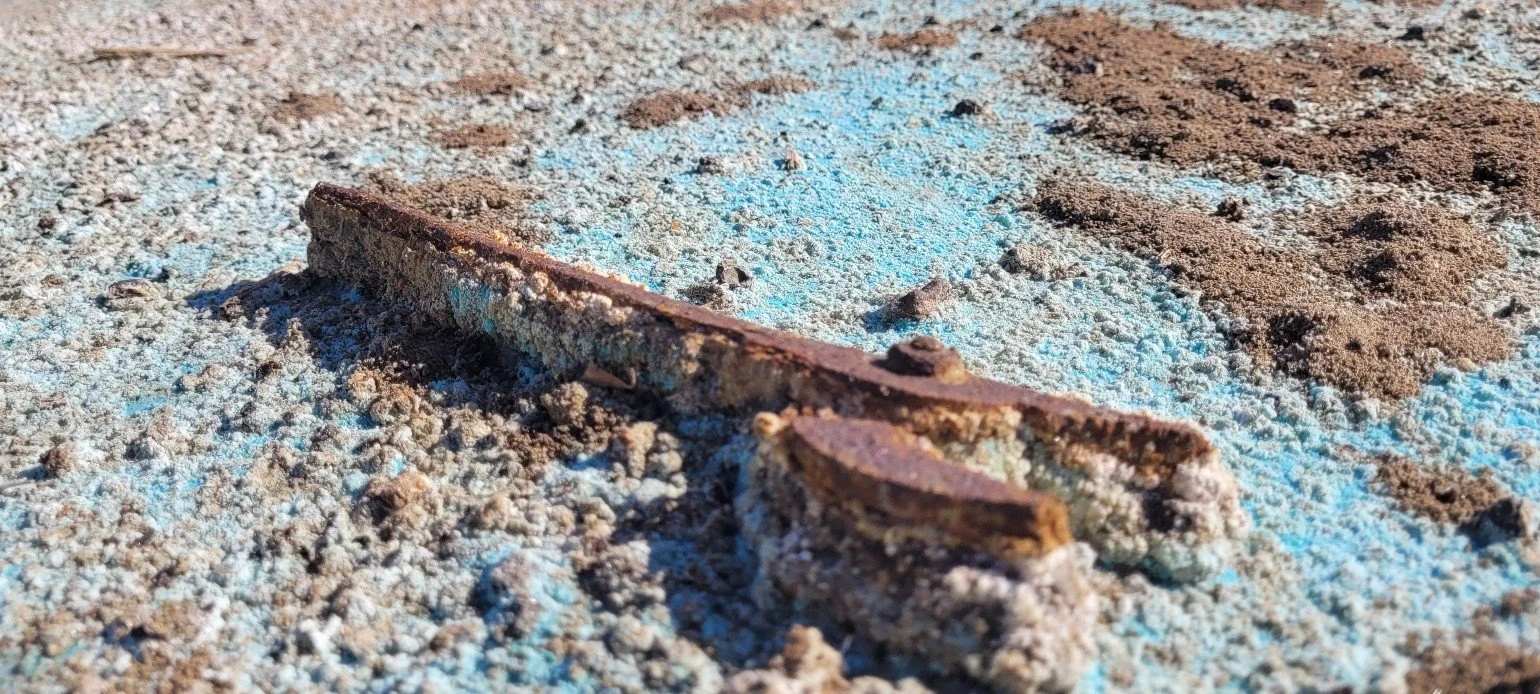
There were blue-green crusts around puddles, white salts, yellow and gray tailings, rusted metal, broken glass, pottery, old bottles, shoes, and other debris. Later I started finding animal bones stained the same extraordinary blue. Many looked like food waste, scraps from somebody's dinner discarded perhaps fifty or a hundred years earlier and transformed by decades in contaminated ground.
Apparently the Northside had been more than a mine-waste area. It had also served as an informal dump. It was part industrial landscape, part archaeological midden, part chemistry experiment. It was contaminated and it was beautiful. I still resist the idea that acknowledging the second somehow minimizes the first. Copper compounds can be spectacular. So can a forest fire. Beauty is not evidence of safety.
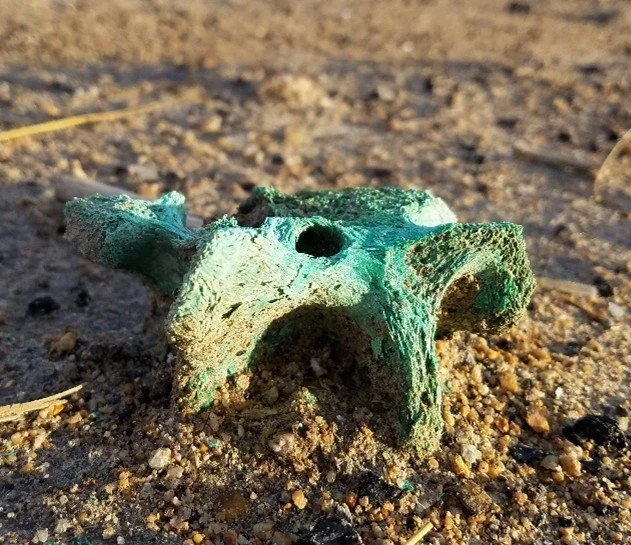
I sent photos to my curious friend Olivia. She was already thinking about how artists might engage people with Butte's damaged landscapes. Along with Olivia, Dark, and others, I became part of that effort, bringing my growing environmental-engineering perspective into it.
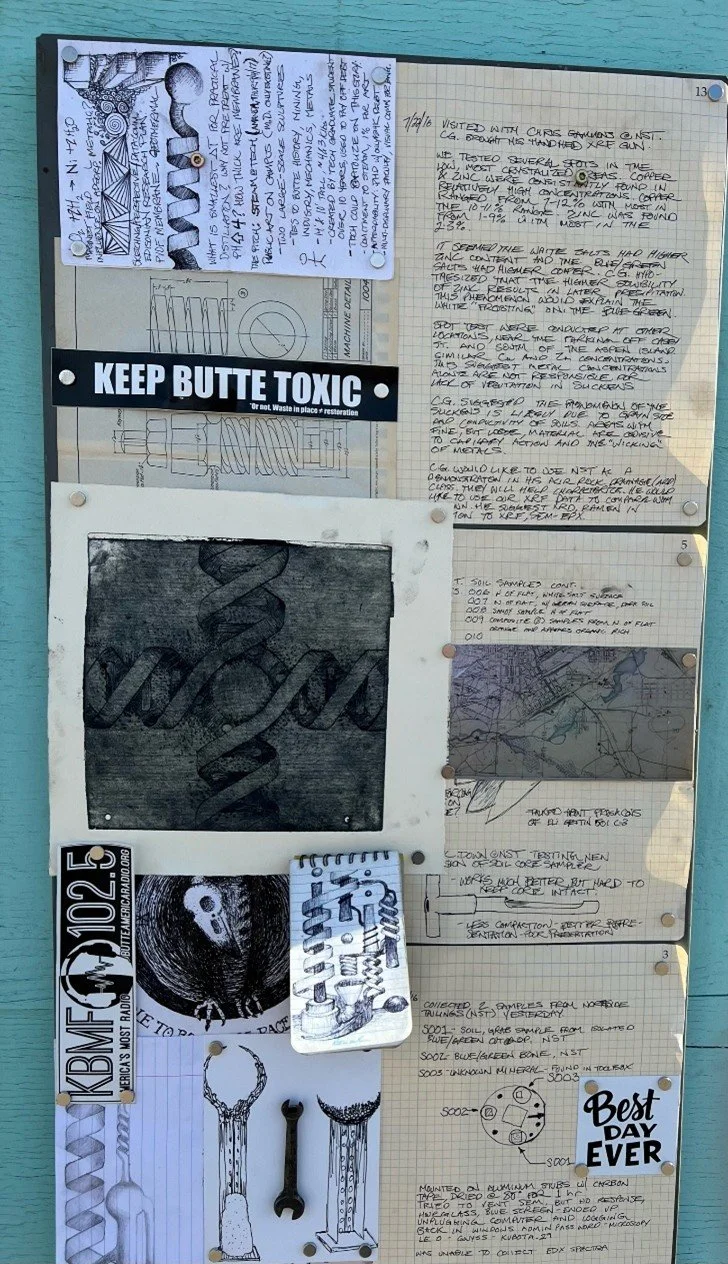
We explored the tailings, collected things, photographed them, and asked questions. I brought an XRF instrument to the site and later examined samples in the lab. The blue material was associated with copper, the whites with zinc and other mineral phases. The blue bones eventually pushed me toward experiments using bone char to remove metals from contaminated water. A dinner scrap became trash, then an artifact in a contaminated landscape, then an art object, then a question in the laboratory. I was moving back and forth between looking at the place as an artist and poking at it as an engineer, and increasingly I saw little reason to keep those things separate.
Within a few months some of the work appeared at Dave Kirk's weird and wonderful Aunt Dofe's Hall of Recent Memory in Willow Creek, MT. The following spring the ideas developed further in A Watershed Moment at the Imagine Butte Resource Center.
One of my pieces was called PPM. Parts per million is one of those units environmental professionals use so often that we forget how abstract it is. We say soil contains 800 ppm lead or 250 ppm arsenic and imagine we have communicated something meaningful. For PPM, I put a sample of Butte soil beneath glass in a wooden cylinder and surrounded it with physical representations of the metals in roughly the quantities in which they occurred in the soil.
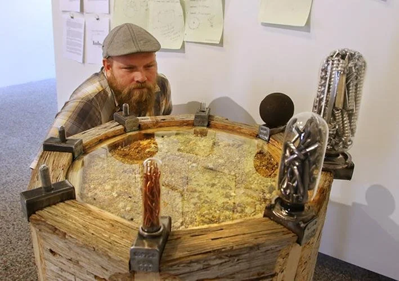
Now you could look at ppm.
What surprised me was that professionals who used the unit regularly told me they had never really pictured what it meant until they saw the piece. I began to understand that art could make technical information accessible without necessarily simplifying it. Sometimes it could just give the information another form.
At that same exhibition, Rayelynn Brandl, then directing the Clark Fork Watershed Education Program, said something I have remembered ever since. Much of her work involved taking young people into the landscape and helping them understand the history of mining damage and restoration in the Clark Fork watershed. As I remember our conversation, she lamented the prospect of losing places like the Northside slickens because they made that history physically legible. She could stand there with students and point: this is mine waste. This is what was left behind. This is part of why the cleanup matters.
Once the waste was covered with clean soil and vegetation, that lesson would become harder to see. She was not arguing against remediation. Neither was I. What she worried about losing was the ability to use the place itself as a teacher.
That distinction has become more important to me. A place is not just soil, water, contaminants, and coordinates. It holds memory, use, attachment, conflict, stories, and knowledge. Cleanup can make a place safer while also changing what can be learned simply by standing there.
Rayelynn's comment also changed the way I heard another Superfund phrase: waste in place. Sometimes contaminated material is left where it is and isolated beneath engineered soil and vegetation. There can be good reasons for doing that. From above, though, the finished landscape can eventually look green and ordinary while the waste remains underneath. The concern is not that contamination should remain visible forever. It is what happens when the evidence disappears and nobody remembers why the remedy needs to be maintained.
By the spring of 2016, we were imagining taking the art back to the Northside. Instead of carrying pieces of the place into a gallery, what if the place itself became the gallery?
Olivia created a proposal for the Butte Natural Resource Damage Program, they were distributing some of the restoration funds that were won in a settlement against Atlantic Richfield. It combined environmental characterization, site-specific art, education, and public engagement. There was real support for it. We received funding, and Pat Cunneen became an important mentor and advocate. Then we tried to actually do it.
The Northside Tailings were not an abandoned lot where a few artists could arrive with extension cords and folding tables. They sat within an enormously complicated Superfund cleanup. There were questions about ownership, access, liability, insurance, and permission from Atlantic Richfield. None of those concerns was ridiculous on its own. Together they made the project effectively impossible, and eventually I gave the money back.
Around the same period, I was moving much deeper into the formal cleanup process. I served on the board of CTEC, the Citizens' Technical Environmental Committee. I attended meetings, read reports, submitted comments, learned the models and acronyms, and asked questions about groundwater, stormwater, mine waste, lead, and risk. I did what the system asks an engaged member of the public to do.
Over time, though, I became unusually well equipped to do it. I had earned my degree in environmental engineering and was pursuing a doctorate. I could read the reports. I knew enough toxicology to question assumptions and enough modeling to understand where numbers came from. I was more than willing to demand explanations from the authorities and experts.
That is a lot to ask of "the public."
By 2017, I had formally asked EPA to reconsider the 1,200 ppm residential lead threshold in light of the lower childhood blood-lead reference value. The EPA nit-picked at my reasoning but confirmed that Butte's original residential level had been calculated using the older target of 10 micrograms per deciliter, and that they would eventually reevaluate. In 2020, I sat down with EPA personnel and contractors working on the Five-Year Review and we ran the IEUBK model using a lower blood-lead target. My recollection is that the result was roughly 410 ppm. I asked that the exercise be documented in the review. It wasn't.
There were other frustrations. Comments disappeared into the process. I found myself increasingly outside conversations as I became more critical. Eventually I resigned from CTEC after objecting to the group's participation in a critique of public-health research that had been drafted by a consultant working for the responsible party, Atlantic Richfield.
It would be easy to turn that history into a story with villains on one side and good people on the other. That is not how I experienced it. A tremendous amount of good cleanup work has happened in Butte, and I have known agency staff, engineers, consultants, health professionals, and community members who care deeply about the place. But trust is not binary, and mine had eroded.
I had gone into the process believing that if I learned enough and participated carefully enough, the science would carry weight. Eventually I learned that technical knowledge and political agency are not the same thing. More importantly, I had become exactly the kind of public participant a highly technical process tends to favor. I had education, institutional access, professional vocabulary, enough confidence to challenge experts, and enough time to sit through years of meetings.
By the end of 2022, I had largely given up on making the Northside installation happen. Then my partner Dawn and I went to Mexico City.
At the Palacio de Bellas Artes we stumbled into a retrospective of the Mexican artist Federico Silva. He seemed to have worked in every direction imaginable: sculpture, painting, geometry, public art, kinetic work, light, movement, technology. There was no single material or style holding everything neatly together.
That mattered because I had been stuck on exactly that problem. The things I wanted to show did not look like a coherent body of work. There were bones and machines, wood and metal, scientific instruments, technical documents, photographs, jokes, anger, history, and objects that looked as though somebody had dragged them out from behind a shed, sometimes because somebody had.
Some of Silva's kinetic work produced visual interference patterns, and something clicked. Maybe the lack of coherence was the coherence.
I started thinking about the two-slit experiment and the different roles through which I encountered the same place: father, scientist, engineer, artist, activist, teacher, cyclist, resident, outsider. Most of the time those roles simply coexist, sometimes awkwardly. Every once in a while several overlap and something becomes visible that I could not see from one position alone.
PPM was one of those moments. The blue bones were another. My years arguing about lead existed somewhere between fatherhood, toxicology, engineering, and activism.
And blue kept showing up.
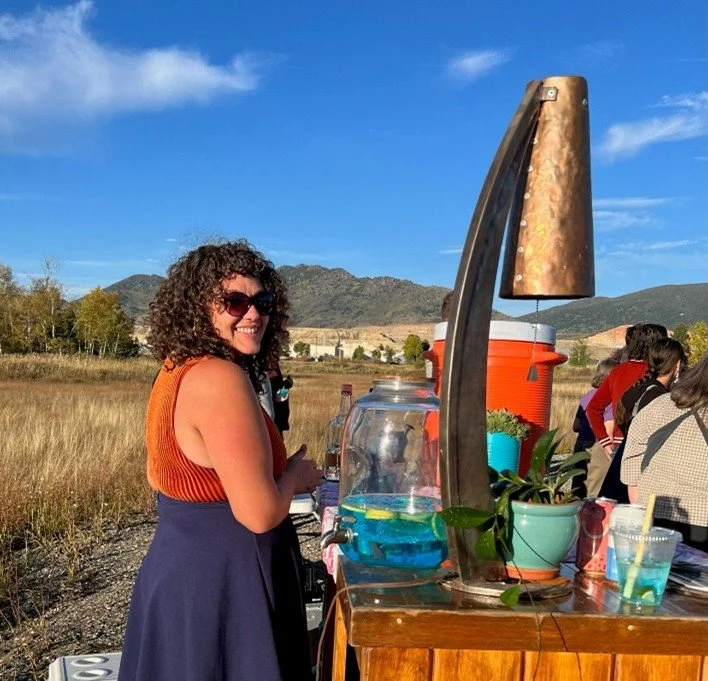
The salts that stopped me on my bicycle got their color from the chemistry of the metals. Beneath the tailings was the blue groundwater from Nora's story. For the eventual installation, Dawn and I made bright blue boozy punch and served it from a glass dispenser that looked disturbingly like photographs of groundwater samples. It was a joke, but it was also a way of putting something normally hidden underground on the table. Nothing encourages conversation about hydrogeochemistry quite like refreshments resembling hazardous waste.
Blue appeared in my doctoral research too. I had been developing magnetic nanoparticles to remove metals from contaminated water and then recovering those metals through electrowinning. Copper and zinc plated out in delicate, lace-like forms. I turned the recovered metal into sculpture and displayed it beside the blue water it had come from and the clearer water left after treatment. At some point it became difficult to say where the experiment stopped and the artwork began.
Standing in Bellas Artes, I realized I did not need to decide. I walked out crying. Dawn was with me. I had spent years thinking I had failed to make the Northside project happen, and suddenly the failure did not feel final anymore. I could see the installation.
A small grant from the University of Montana's Co-Lab for Civic Imagination helped make the next attempt possible. By then I was asking a different question: could art create another kind of public meeting? Could a sculpture start a conversation that a fact sheet could not? Would people encounter the cleanup differently while standing in the place being discussed? Could we gather without putting experts at the front of the room and everyone else in chairs waiting to speak?
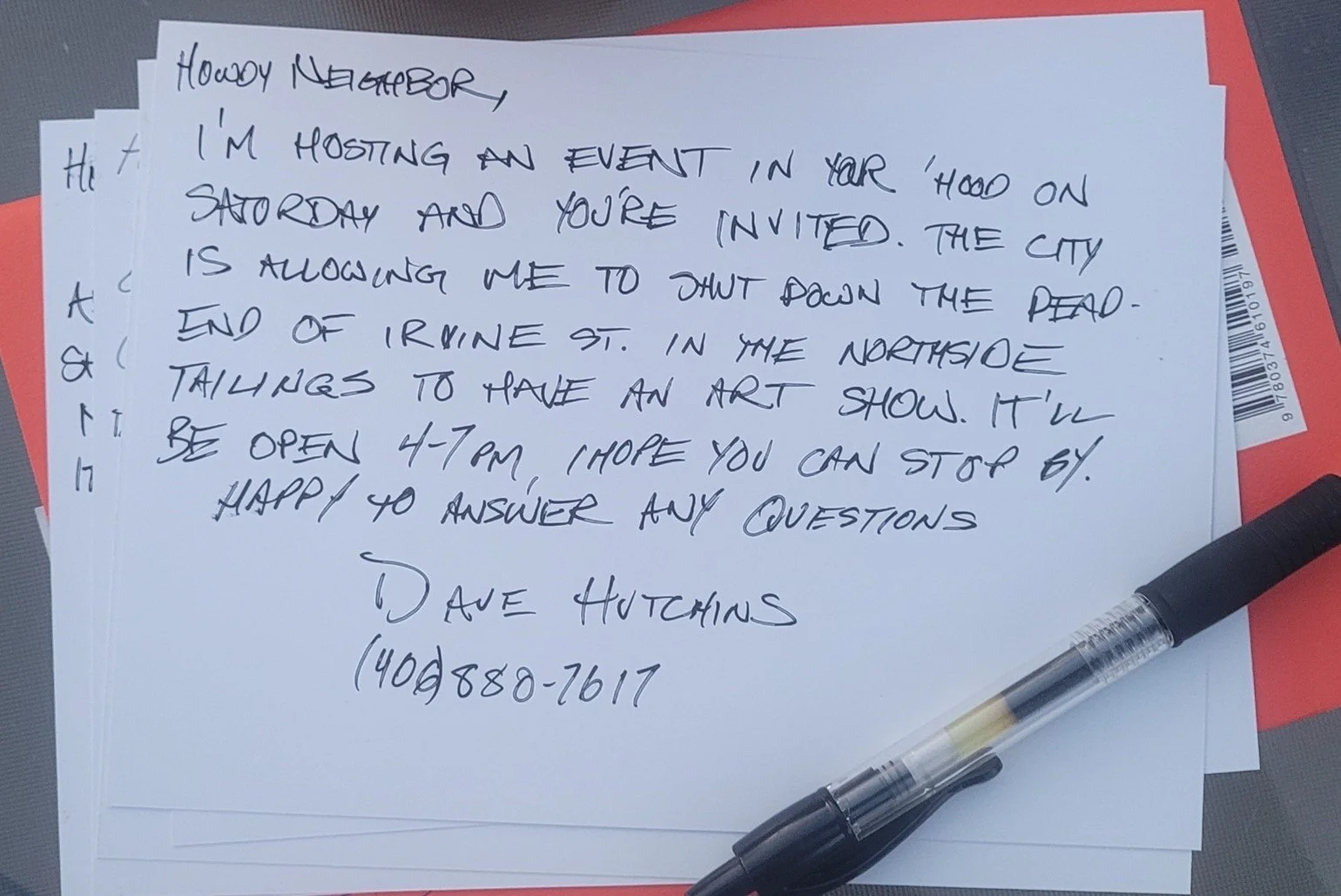
The second attempt was almost comically modest compared with the initial proposal. We had a small grant, a newly constructed well pad, friends, food, blue punch, and an idea that had refused to die. Unexpectedly, Butte being a festival city made the project possible. After all the earlier difficulty with access and permission, it turned out that Butte knows how to close a street and throw a party. There was a routine process for holding an event and temporarily closing the dead end of Irvine Street. I filled out the form, sent it to the Council of Commissioners, and watched it get approved without discussion.
After years of navigating Superfund bureaucracy, the path to the installation turned out to be a municipal event form.
Not long before Interference Patterns, I came across a Facebook post from a man remembering how much fun he and his friends had playing in the tailings when they were kids. He posted a photograph of a fort they had built from discarded material, and other people joined in with memories of their own. I had seen bicycle tracks and small footprints down there myself.
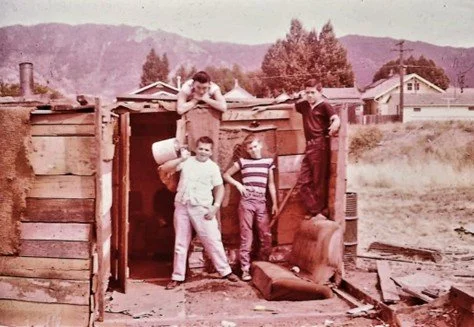
A contaminated landscape can also be a childhood landscape. Children do not experience an "exposure pathway." They experience a place to build a fort. That does not make the contamination less dangerous. It makes the abstraction less complete.
I had spent years acquiring the language that got me into the room. The people living closest to the contamination should not have needed any of it. People living around contaminated places possessed other kinds of knowledge, much of which never arrived in technical language.
On the morning of September 23, 2023, I had the nearly impossible task of installing a decades worth of work at the site. My friend Daniel Hogan was helping me install one of the largest pieces, Bloody Knuckles. We had it suspended from a material-handling machine on the way to the Northside. I had considered many logistical details. The height of the railroad overpass on Harrison Avenue was not one of them. We cleared it by inches.
There are probably more elegant stories about installing large sculpture. This one feels appropriately Butte.
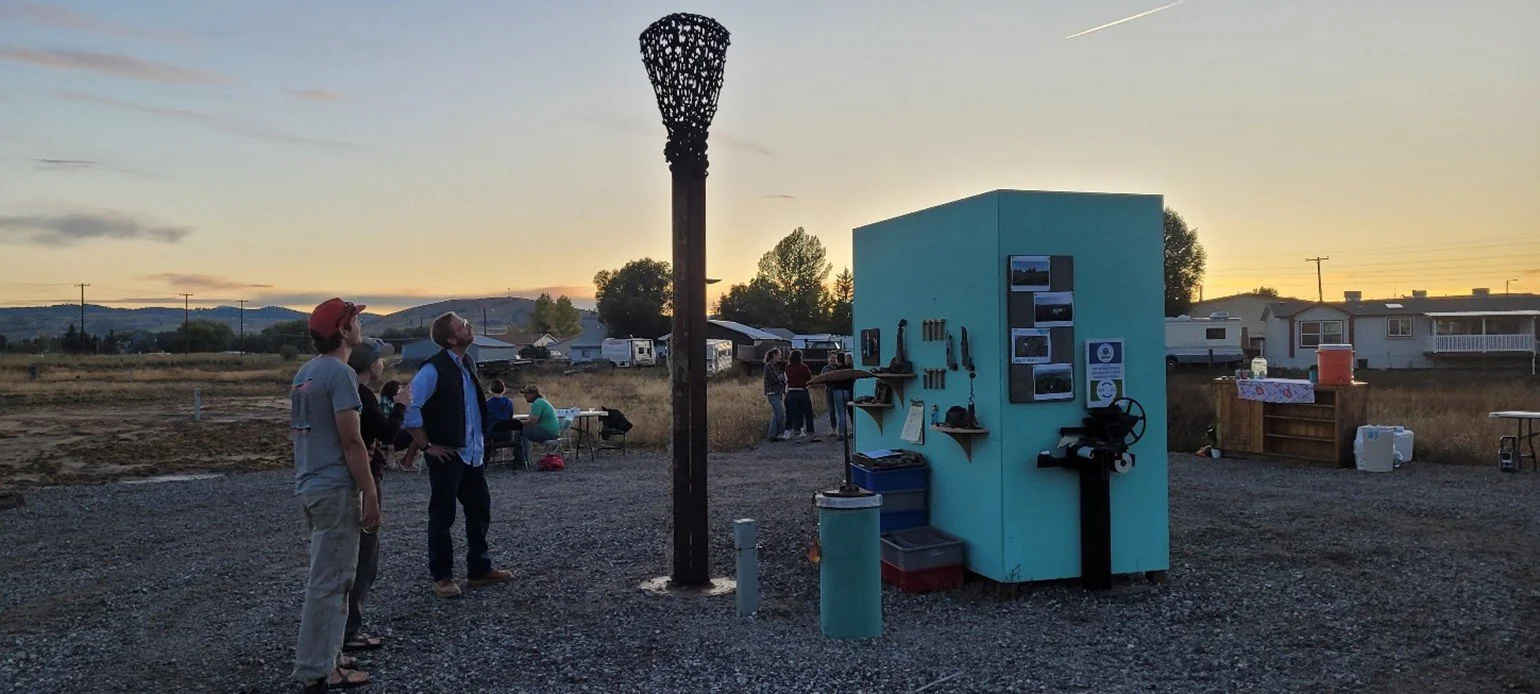
The show included more than a dozen works, but a few explain what I was trying to do. PPM had made the whole journey from the early exhibitions and now sat inside the place whose chemistry it had tried to make understandable.
The Agency was less subtle. Visitors could write a public comment and turn a crank on a Rube Goldberg-like contraption. A mechanical hand lurched forward and rang a service bell while a recording played of former EPA Regional Administrator Doug Benevento offering the familiar assurance that the remedy was protective of human health and the environment. Ding. Protective of human health and the environment. Ding.
After enough years in Superfund meetings, I found this very funny. Participation in the cleanup may have permanently damaged my sense of humor.
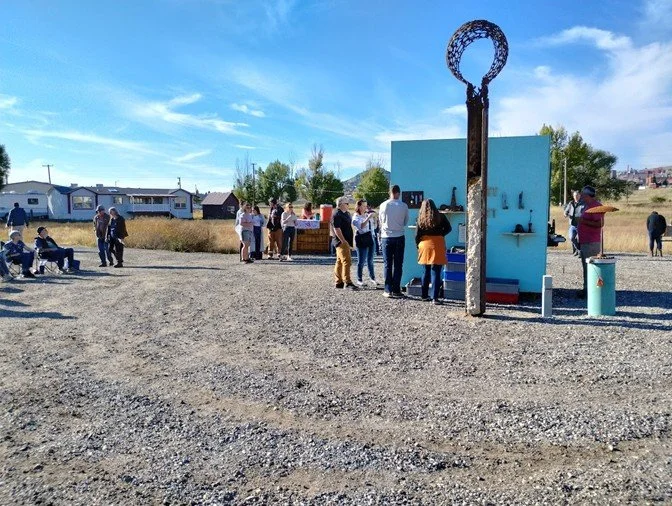
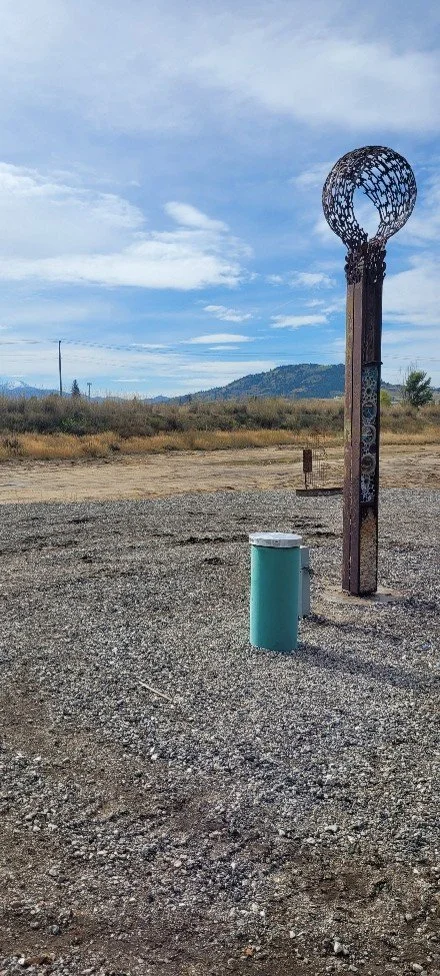
Then there was Bloody Knuckles. Nearly fifteen feet tall, it begins with a massive riveted I-beam I pulled from the Northside Tailings and stood upright on a large steel gear. Hundreds of rusty wrenches flare from the top into a partial sphere, old tools that had outlived their usefulness and ended up in pawn shops and junk piles. All that labor, wear, rust, and implied busted knuckles gave the sculpture its name.
Into the web of the beam I built a rough mosaic from things found in the tailings: milky glass from old cream jars, porcelain painted with delicate blue flowers, bottle tops, broken glass, blue bones, tea-kettle spouts, and rusty pieces whose original purposes I no longer know. One circular window holds a raven's skull crusted with blue copper salts. The thing feels part monument, part reliquary, part industrial artifact. Almost everything in it had already lived another life.
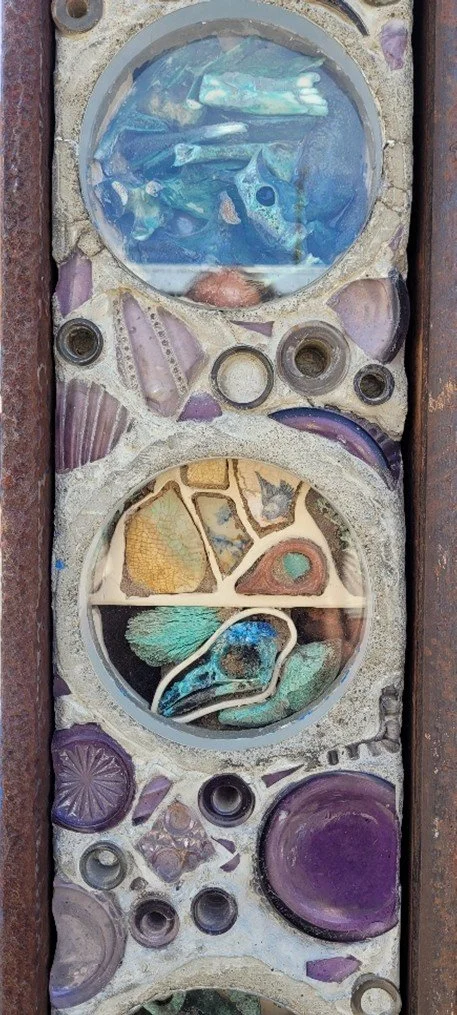
I increasingly think of Bloody Knuckles as a marker. Not a warning that the future Northside is dangerous. I want the remediation to work. I want the sculpture to say something simpler: something happened here.
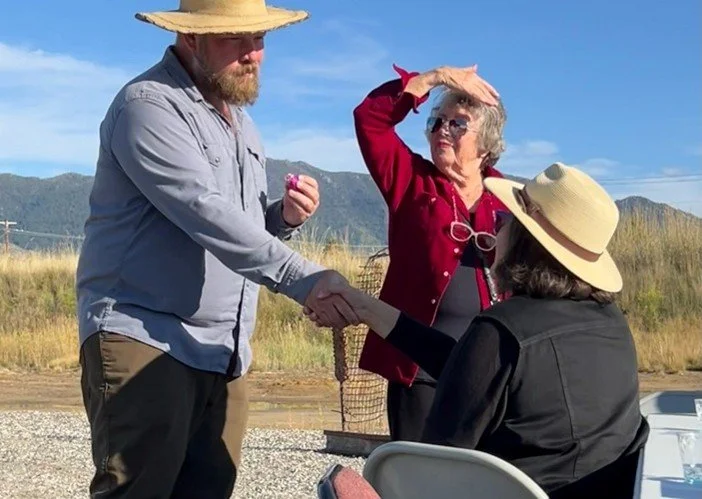
That afternoon people came. Friends, artists, scientists, Superfund regulars, curious people, and people who would probably never voluntarily attend an EPA meeting. I was happy they were looking at the art, but I cared just as much that they were standing in the Northside Tailings. The place was part of the installation, maybe the most important part.
The blue-green salts were still there, along with white crusts, yellow tailings, rusted metal, broken glass, bones, plants and, just beyond all of it, houses. People lived here.
That obvious fact can become strangely abstract in environmental cleanup. We talk about receptor populations, exposure pathways, land use, institutional controls, and community involvement. Those are useful concepts, but a receptor population is also somebody sitting at a kitchen table looking out at contaminated ground behind the house.
After I gave a talk, one of the neighbors asked me, "So where are you from?"
I tightened up immediately. That question carries some weight in Butte. People have been coming here for a long time to take things: minerals, labor, money, stories, data. Butte has also been studied almost endlessly. Researchers study mining, contamination, labor, health, architecture, Superfund, and the Berkeley Pit. Artists come to make work about Butte. Journalists come to explain it. Sometimes they leave something useful. Often, they just leave.
I was not born here, and for a moment I thought she was calling me out. Part of me wondered whether she should. Had I spent an afternoon criticizing extractive forms of participation while putting on an art show beside somebody else's neighborhood and explaining their place back to them?
But that was not where she was going.
She told me they lived right there. Plans had been made for years for the contaminated land practically in their backyard, but she did not feel anyone had really talked with them about what was happening or asked what they wanted. She thanked me for inviting them.
I do not remember exactly what I said, but I remember the feeling. I had spent years trying to get farther inside the official process. I had gone to school, earned degrees, learned the vocabulary, served on the citizen board, read the reports, submitted comments, argued about models, and sat down with EPA staff to run one.
She lived next door, and she did not feel invited.
That is the part of the story I keep returning to. For years I had been frustrated that formal participation did not give me the influence I thought it should. Standing there, I began to see another question beneath my own frustration: why should anyone need to become what I had become simply to have a meaningful voice in decisions about the place where they live?
Maybe the measure of public participation is not how many opportunities people are given to comment. Maybe it is whether the people living with the consequences recognize themselves as participants.
For one afternoon, something different happened. There was art, food, music, blue punch, contaminated soil, technical documents, neighbors, friends, and ridiculous machinery. There was no front of the room because there was no room. People stood in the place itself and talked.
I do not want to claim too much for that. Interference Patterns did not change the remedy or redistribute power. But it changed my understanding of the problem.
Now, three years later, the number that first pulled me into the process has changed too. EPA has lowered Butte's residential soil-lead cleanup level from 1,200 ppm to 456. The new decision uses a target blood-lead level of 5 micrograms per deciliter, even though EPA acknowledges that there is no known safe level of lead in blood.
I am glad the number changed. I also cannot experience 456 as the kind of answer I once wanted. Five micrograms per deciliter is a policy target used in the model, not a boundary between harm and safety. Change that target and the soil number changes. That does not make the model useless. It means the line is still drawn by people.
My sons were children when I first asked whether our backyard was safe. They grew up while I kept asking. Now they live elsewhere. Institutions have one sense of time. Childhood has another.
Butte is cleaner than it was, and that matters. Contaminated material has been removed and contained. Exposure has been reduced. Streams and landscapes have improved. I have watched some of that transformation from a bicycle. When new trails through remediated areas first opened, I often felt as though I had them entirely to myself. Everything was so new that the landscape still felt provisional. Now those trails are well used, and some stretches are already wearing out. Even the restoration has started to age.
That is an unexpectedly concrete measure of how much time has passed.
I no longer think the important question is whether I will miss the Northside Tailings. I probably will, in the complicated way people miss places that shaped them, but that is not an argument for leaving the waste there. The more important question is what happens to a place as it is cleaned up, and who gets to participate in deciding what it becomes.
That is why Rayelynn's concern feels different to me now. She was not nostalgic for contaminated slickens. She was an environmental educator worried about losing the ability to stand with young people, point at the ground, and make history visible. It is why the photograph of the childhood fort matters too. Not because playing in mine waste was somehow good, but because people actually lived their lives in these landscapes long before we translated those lives into exposure scenarios.
And it is why I keep thinking about the neighbor.
The copper left Butte, and much of the wealth it generated left too. Enormous quantities of waste remained. Then people made decisions about what would be excavated, what would be covered, what could be restored, what was technically impracticable, and what would need to be managed in perpetuity.
Those decisions require engineering, but they are never only technical. They also contain judgments about risk, cost, land use, acceptable exposure, memory, and the future of a place. The people who live with those decisions should not have to become engineers to participate in making them.
When I named the installation Interference Patterns, I thought I was naming a group of artworks. Now I think I was naming something larger. Father, engineer, scientist, artist, activist, teacher, neighbor, outsider: different ways of encountering the same place. Most of the time those roles coexist imperfectly. Occasionally several overlap and something becomes visible that I could not see from any one position alone.
The blue puddle was one of those moments. PPM was another. Blue bones became art and then research. Contaminated water produced metal that became sculpture. Years of frustration with public participation became, briefly, another way to participate. And the neighbor asking where I was from may have been the clearest interference pattern of all.
I had spent years learning how to speak inside the process. She reminded me to ask who the process was built to hear.
Soon the Northside will change. I hope the tailings go, the water gets cleaner, and whatever public space replaces them is beautiful. I hope children play there without their parents having to learn the IEUBK model to decide whether the dirt is safe.
I would still love to see Bloody Knuckles there, rusting away in whatever comes next. Not as a shrine to contamination, and not because the old landscape was better. I would like it there as a reminder that a place can become safer without becoming blank, and as a question for whoever comes afterward:
Something happened here. Who remembers it? Who gets to tell the story? And when decisions are made about what this place becomes next, who gets to be in the room?